August 17, 2026·ClipSonar editorial
Why Instagram Insights Won't Tell You What to Post Next
Native Insights show what already happened on your account. ClipSonar reads public Instagram and TikTok clips so you can brief the next Reel from proof.
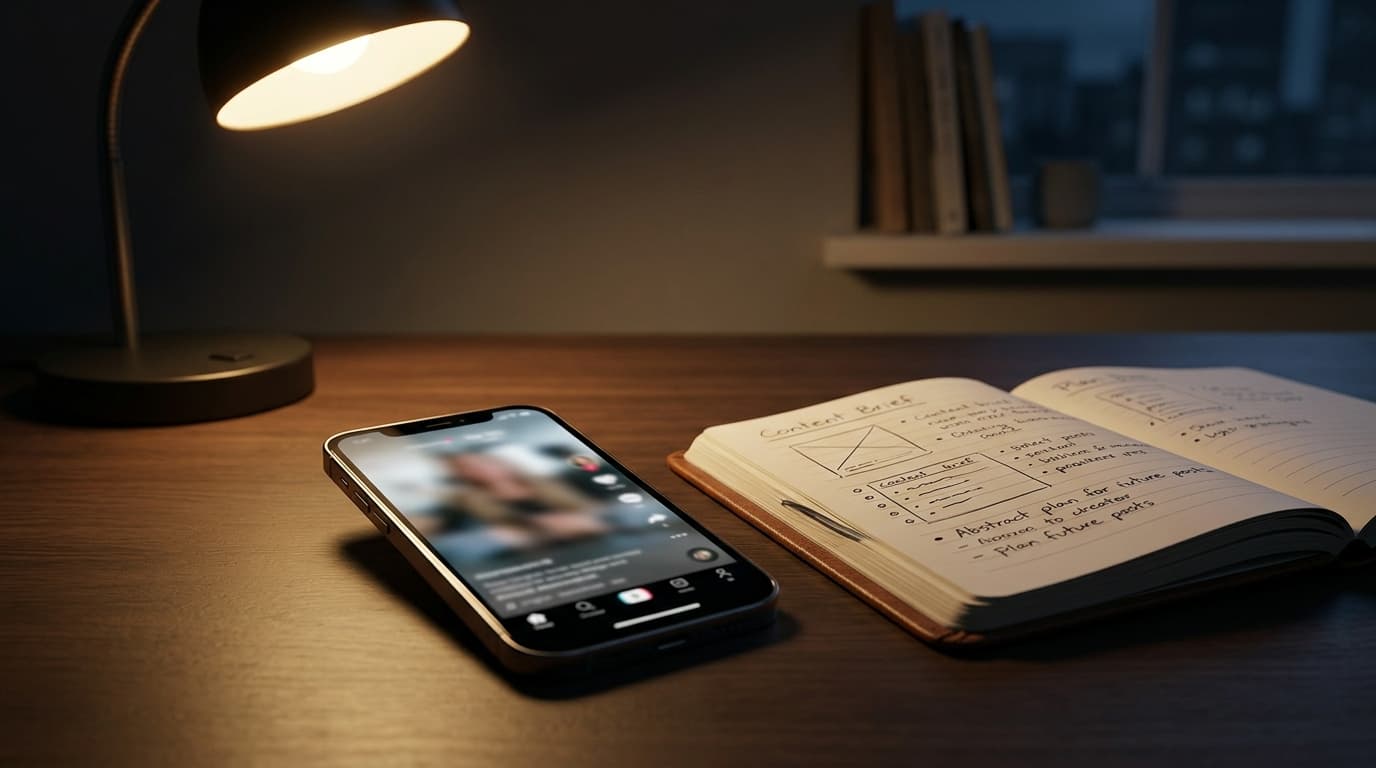
Your Instagram Insights dashboard is a rear-view mirror. It can tell you which Reel already earned saves. It cannot tell you which hook, format, or story beat to ship on Thursday.
That gap matters because short-form is where the money is. In a 2026 survey of more than 1,500 marketers, 48.6% named short-form video as the media format with the biggest ROI (source). Teams that treat Insights as a brief are optimizing last week's post, not the next one.
ClipSonar is built for the other loop: read public Instagram and TikTok clips that already won in your category, then write the next script from that evidence.
Key takeaways
- Native Insights report your account. They do not decode competitor or category winners.
- ClipSonar starts from public clips, then gives you a playbook and the videos behind it.
- The ClipSonar agent is the chat on top of that. Ask what's winning, who to study, or what to post. Get hooks, ideas, or a script.
- A usable brief names hook type, format, duration, story beats, and a clip you can replay.
Why your own Insights stop at last week
Most teams live in Instagram Insights, TikTok Analytics, and a weekly screenshot pack. If a Reel got 3x your average watch time, make more like that. The advice is free and hard to argue with in a status review.
It still cannot see the feed you are competing in. It cannot tell you that three accounts in your niche opened with a failed attempt, then a reveal, then a spoken CTA. It cannot tell you a competitor's 11-second clip is pulling comments while your 45-second explainer stalls at the second beat.
On Instagram, 52% of social users gravitate to short-form under 60 seconds, while brands still put single video in only 28% of posts (source). The audience is already in the format. The planning system most teams use is still a self-scorecard.
A generic chat model does not close the gap either. It can list "10 Reel ideas for a skincare brand." It cannot open public clips from your niche or point you at the example. If you cannot watch the proof, you do not have a brief.
What ClipSonar does instead
ClipSonar is content intelligence for Instagram and TikTok. You do not connect posting access. You point at a public profile, a topic brief, a collection of links, or a clip URL.
Every analyzer splits the job into two tabs:
- Insights is the playbook: positioning, style DNA, working hooks and formats, failure modes, and what to make next.
- Clips is the proof: the actual videos behind every claim.
That is the difference against native Insights and generic AI. Native tools answer what happened on your account. A chat model answers from prior text. ClipSonar answers what is winning on Instagram and TikTok right now, and shows the clip.
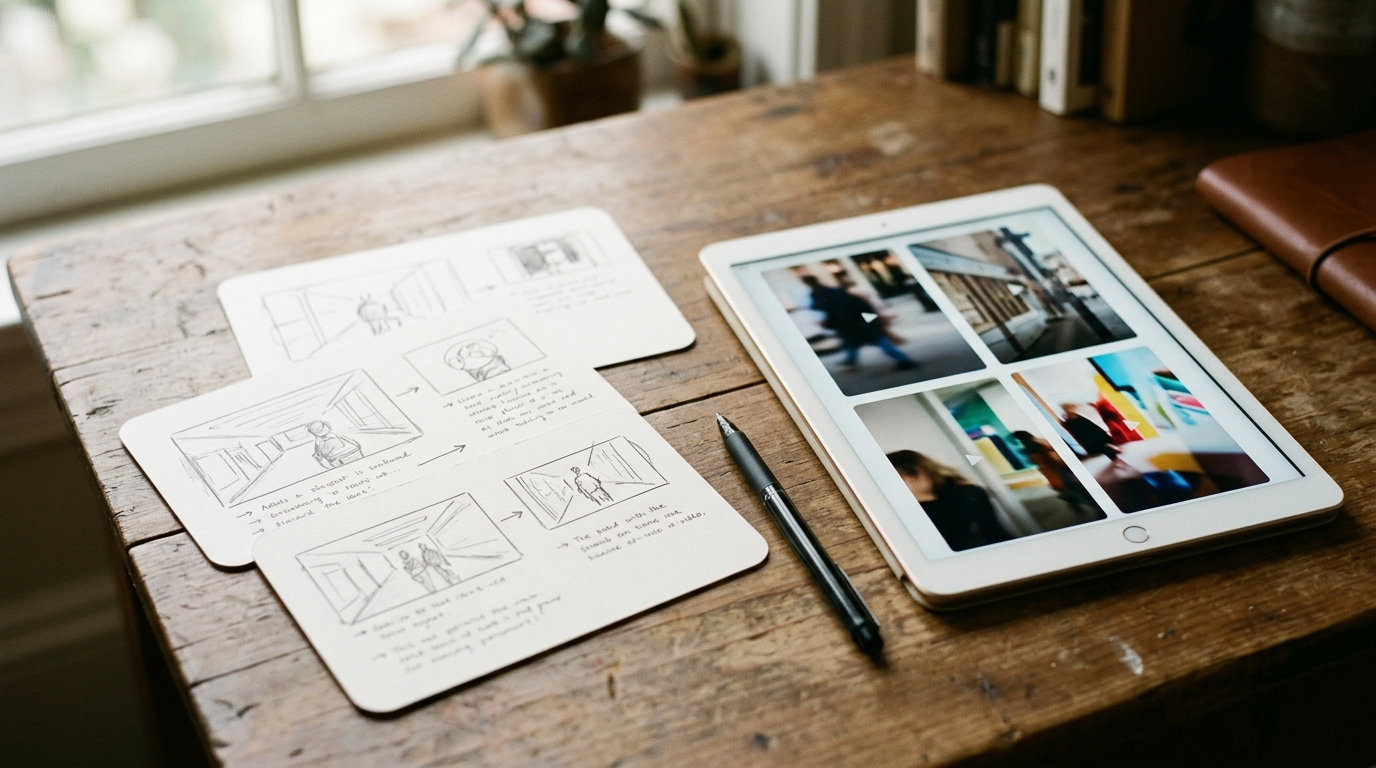
The ClipSonar agent
The ClipSonar agent is how you use that in plain language. It is the chat in the product, not a separate research tool.
You ask what's working in a topic, which creators to study, or what the next Reel should say. The agent reads public Instagram and TikTok clips first, then returns hooks, ideas, or a script you can shoot. You can still open Insights and Clips yourself. The agent sits on top of the same evidence.
Start from a short brief or a public @handle. No Instagram or TikTok login. See how the agent works.
A brief you can ship this week
A useful output is not a mood board. It is a one-page brief with five fields:
| Field | What to write | Why it matters |
|---|---|---|
| Hook type | The first 1 to 3 seconds, named (question, failed attempt, pattern interrupt) | Retention is decided before the value lands |
| Format | Talking-head, screen-record, stitch, demo, story-with-overlay | Category winners cluster by format, not by topic label |
| Duration band | The length range of the clips that actually held | Instagram interaction still favors under 60 seconds |
| Story beats | Hook, problem, value, proof, offer, CTA if they appear | You can reuse a recipe without copying a face |
| Proof clip | A public URL you can open in the meeting | If nobody can watch it, it is not evidence |
Creators can start from a single profile. Brands can start from a competitor set. Agencies can reuse a collection as a client-ready pack. The help center spells out the same Insights versus Clips split so the playbook and the proof stay attached.
A first sprint: vegetarian weeknight Reels
Suppose you cook vegetarian food and your last three Reels sat under your average watch time. Insights will show the drop. They will not show that public accounts in the same pocket are opening with a burnt pan, cutting to the fix in under eight seconds, and ending on a single grocery CTA.
A first ClipSonar sprint looks like this:
- Target vegetarian weeknight-cooking Reels, not "food" as a whole.
- Ask the ClipSonar agent what's winning, or open a creator / topic analyzer.
- Read Insights: talking-head plus overhead demo, failed-attempt hooks, under 45 seconds, spoken CTAs.
- Open Clips and keep only URLs that actually show those beats.
- Write the brief: hook = failed attempt; format = overhead demo; duration = 30 to 40 seconds; beats = fail, fix, plate, one grocery CTA; proof = two URLs.
- Shoot one Reel from that recipe. Then use your Insights to see if the test worked.
That walkthrough is a method, not a claim that those five clips live in this article. You leave with a brief and proof, not a screenshot of a declining graph.
How to run it without another scroll session
- Pick a target, not a vibe. One creator, one topic brief, or one campaign collection.
- Ask the ClipSonar agent, or read Insights before you browse. Write down DNA, hook mix, duration, and the next-post note. Then open Clips and test whether those claims have examples.
- Name three patterns and one anti-pattern. If you cannot name a failure mode, you will copy the average clip.
- Write the next script from the table above. One hook, one format, one duration, one CTA. Attach two proof URLs.
This is slower than asking a chatbot for ten ideas. It is faster than three hours of doom-scrolling with a camera roll full of screenshots and no formula.
FAQ
Do Instagram Insights still matter?
Yes. Use them to judge your distribution, retention, and which of your posts earned saves. Do not use them as the only input for what to make next.
Do I need to connect Instagram or TikTok?
No. Public profiles, topic briefs, and clip URLs are enough. ClipSonar does not need posting access to study what already works.
What should a first sprint include?
One creator or one topic, the Insights playbook, a short clip set, and a one-page brief. Ship one post from that brief before you add a second target.
If you want the loop in one workspace, start with a creator, a competitor set, or a question in the ClipSonar agent. First week is free on Basic and Pro.
Author: ClipSonar editorial. We build Instagram and TikTok content intelligence at clipsonar.com. Questions: support@clipsonar.com.
Ask what's working. Get the next Reel.
The ClipSonar agent reads public Instagram and TikTok clips, then returns hooks, ideas, or a script.
Ask the agent free7 days free on Basic or Pro